While most of the world was still treating AI image generators as a party trick, Erik Gen was already deep inside the machine, pulling out images nobody had seen before. The pseudonym of Oliver Roeger, a German designer based in the US, Erik Gen has been researching AI intensively since the summer of 2022, treating it not as a shortcut but as a genuinely new medium with its own alien logic. His approach runs against the grain. Instead of using AI to imitate human aesthetics, he hunts for what the machine can do on its own: the patterns, distortions and structures that exist beyond any human design paradigm. He trains models, manipulates algorithms and deliberately courts the unexpected, aiming to push past AI’s tendency to remix the familiar and generate something genuinely native to its own computational mind. Sometimes the result is beautiful. Sometimes it’s deeply unsettling. Usually both. His films have won awards in Barcelona, Dubai and Venice and screened in Miami, Berlin, Cannes, Seoul and Tokyo, and one of his clips racked up millions of views online. Uncredited, naturally. He is also, when he isn’t bending machines to his will, a senior instructor in Digital Media Design at the University of Illinois Chicago.
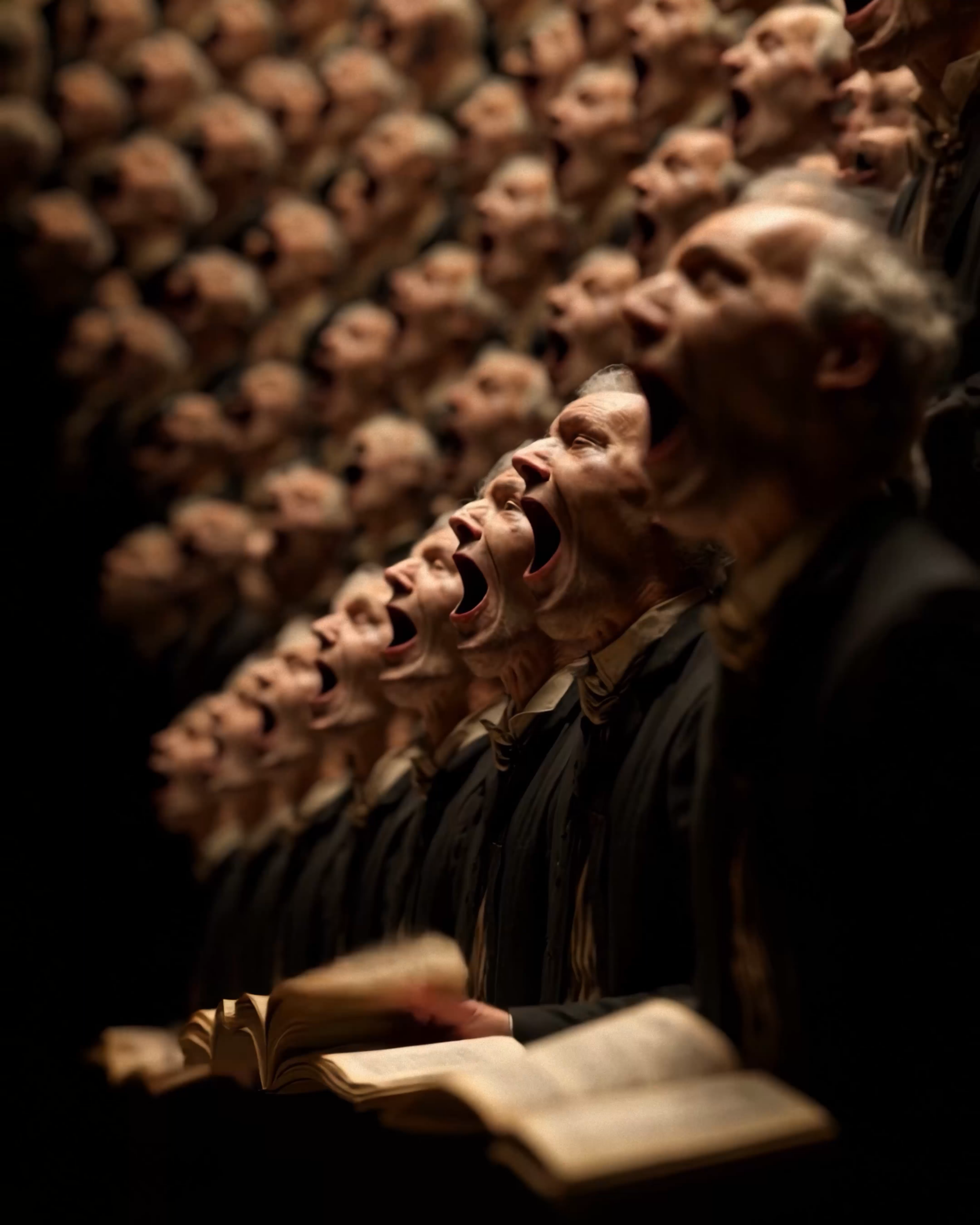
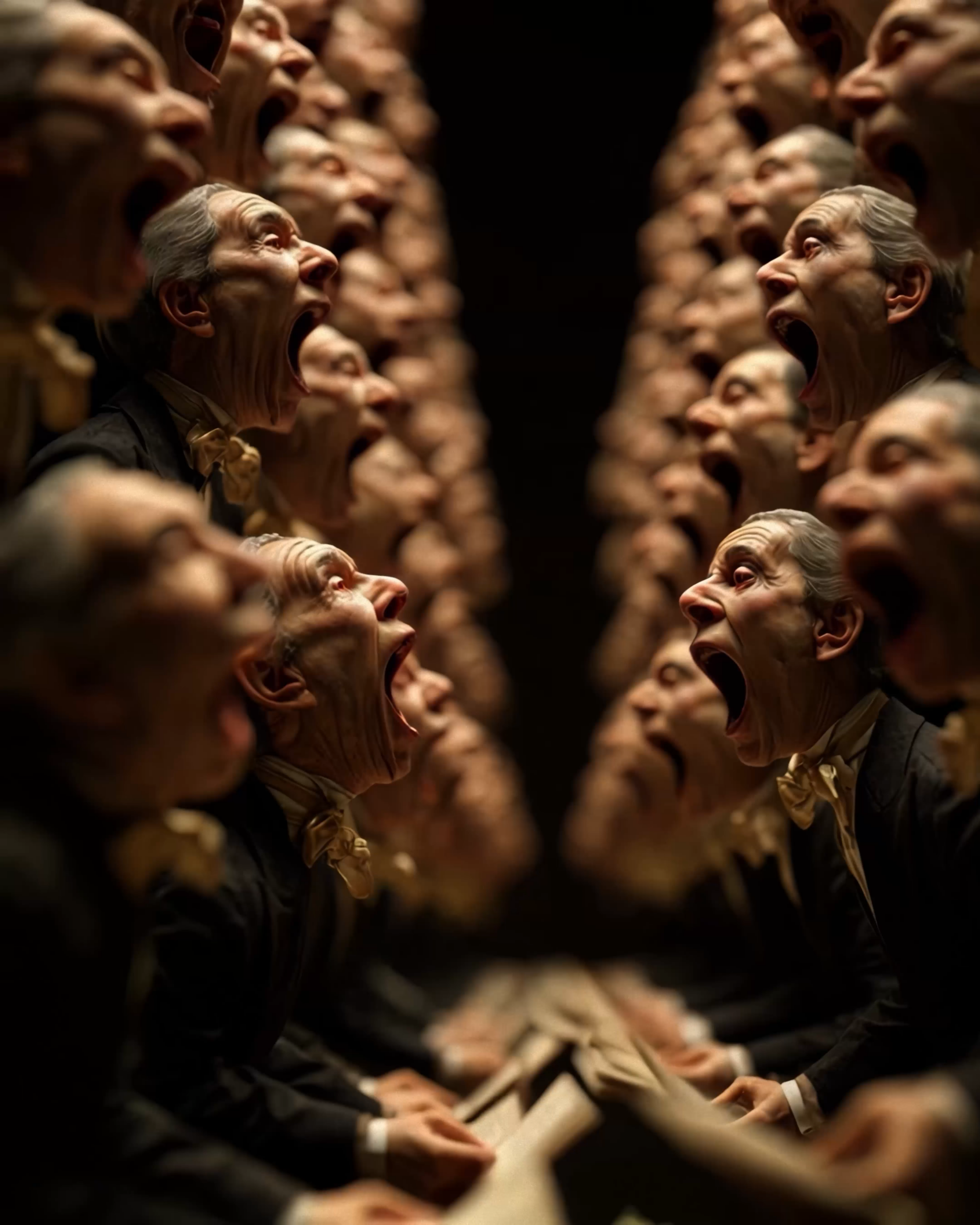
At Kinomural he’s showing Antiphony. Two identical male choirs stand facing each other across a narrow void, singing not to an audience but directly into each other’s mouths, each note at once an attack and a reply. As the piece escalates, individual voices dissolve into a single impossible organism: faces repeat, expressions synchronise, and the architecture of the choirs starts to matter more than the men themselves. Music becomes ritual, ritual becomes confrontation, and confrontation becomes a strange kind of communion. No resolution, just an ever-tightening feedback loop on the thin line between harmony and conflict.

